White Spots on Skin: Causes, Symptoms, Treatment and Prevention
June 21, 2026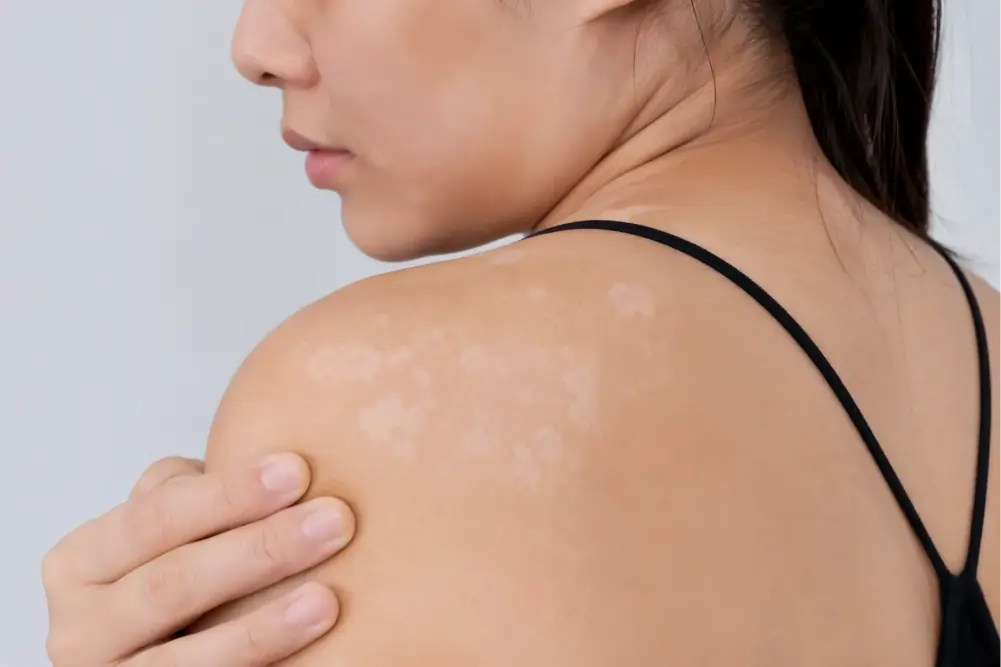
White Spots on Skin: Causes, Symptoms, Treatment and Prevention
White spots can appear due to multiple reasons, ranging from a common fungal infection (like tinea versicolor) to complex pigmentation disorders (like vitiligo). Understanding the symptoms and causes and taking effective measures accordingly can help you manage the condition effectively.
What are White Spots on the Skin?
White spots on the skin are patches of varying shapes and sizes that appear lighter than the rest of the skin (often white or pale pink). These patches can be flat or raised and may have various textures: dry, scaly, or smooth. Additionally, they can either develop slowly over time or occur abruptly and persist for a while.
White patches are generally more apparent in people with dark or tanned skin.
Common Causes of White Spots on the Skin
White spots on the skin may appear for many reasons, including:
-
Tinea Versicolor:
Tinea versicolor is a common fungal infection caused by the overgrowth of a yeast called Malassezia. It is normally present on human skin, but when it overgrows (usually happens in the moist, humid conditions, causing excessive sweating, oily skin), it alters the pigment (known as melanin) production in the skin. This leads to the appearance of lighter or darker skin patches on the skin.
Countries with a tropical climate witness a higher number of cases, affecting almost 40% of the population. Usually, tinea versicolor is mild, with a few cases exhibiting slight itchiness. It is non-communicable in nature and can be treated with antifungal creams or shampoos.
-
Vitiligo:
Vitiligo, also called leukoderma or safed daag in Hindi, is a non-communicable autoimmune disorder in which pigment formation is reduced as the body’s immune system starts attacking melanocytes (melanin-producing cells). As melanocytes decrease, white patches appear on the skin. Although harmless, vitiligo affects almost 0.1-2% of the global population. These spots can develop anywhere on the body. It should not be ignored that vitiligo cannot be treated or cured, and can only be managed through topical medications, light therapy or other treatments, depending on the severity of the case.
-
Idiopathic Guttate Hypomelanosis:
Idiopathic guttate hypomelanosis (IGH) commonly affects people with long-term sun exposure and is mostly seen in the older generation, particularly the 40+ age group. It presents itself as small, round or oval-shaped white patches on the skin. They mainly appear on the arms, chin and other sun-exposed areas and are usually flat and less than a centimetre in size.
IGH is a non-harmful and non-infectious disorder that does not need any medical intervention. But the marks will not vanish without professional treatment. For cosmetic reasons, some people may decide to seek medical advice and undergo treatment.
-
Pityriasis Alba:
Pityriasis alba commonly affects children and adolescents. It is a mild form of eczema (atopic dermatitis, a non-contagious skin condition that causes dry and itchy skin), which temporarily reduces the activity of the melanocytes, lowering melanin production. These patches often appear slightly red or pink in colour with a scaly texture. As the eczema settles down, the affected areas heal and turn pale. It is commonly visible on the cheeks, around the mouth, but can also appear on the neck, arms or upper body. As it is a harmless skin condition which goes away on its own, the use of moisturisers and topical treatments can be considered to manage the symptoms.
-
Post-inflammatory Hypopigmentation (PIHpo):
After the inflammation subsides and the skin begins to heal itself, post-inflammatory hypopigmentation may develop. It can occur after skin injuries, burns or conditions like psoriasis or eczema. Affected areas may appear lighter due to reduced pigment. These skin patches are, in general, temporary and fade over time, although in some cases, they may persist. Proper skincare routine and regular use of sunscreen (SPF 50+) can help support the healing process.
Cancerous Causes Behind the White Spots on the Skin
Most white spots on the skin are generally harmless and do not have any association with any form of cancer. However, in rare cases, skin cancers may appear as pale, pink, or slightly lighter patches, especially in early stages.
Skin cancers that can appear in an atypical or subtle form can include:
- Basal Cell Carcinoma - Generally, a pearly coloured skin growth, lump, patch, or lesion on sun-exposed skin.
- Squamous Cell Carcinoma - Sometimes, a raised, red-coloured patch, often crusty or scaly.
- Amelanotic Melanoma - A rare type of melanoma without melanin that can look pink or red.
Any spot that changes in size, colour, or texture or refuses to heal, needs a doctor’s evaluation.
How to Tell if a White Spot on the Skin is a Sign of Cancer?
Since most white spots are relatively harmless and do not require medical attention, pay attention to how they look and how long they persist, as some rare forms of skin cancer begin as pale, pink, or even white patches on the skin.
If a white spot reflects any of the following features, it may require additional medical care:
- Change in shape or size of the spots, spreading and developing uneven borders.
- Change in texture, such as rough, scaly, crusted or thickened skin.
- If spots do not go away even after proper skincare or treatment.
- Experiencing bleeding, persistent itching, and pain.
- New spots appearing on sun-exposed skin areas like the face, arms, and neck.
Effective Treatment of White Spots on the Skin
White spots treatment options depend on many things, including the cause of the white spots, the severity of the condition, the extent of the affected skin, and the rate at which the patch grows. Your age is also a factor that determines your treatment.
Possible treatment solutions that can be considered for white spots on the skin are:
-
Antifungal treatment
White patchy skin due to fungal infections can be treated using anti-fungal lotion/cream such as econazole and fluconazole, and shampoo like ketoconazole.
-
Topical anti-inflammatory creams
Spots caused by the inflammatory process can be treated by applying topical steroid creams or non-steroidal anti-inflammatory creams. These creams help reduce swelling and irritation and slow the progression of pigment loss. Do not take these medications without consulting your doctor.
-
Moisturisers
Regular use of a gentle moisturiser can help hydrate the skin, which in turn soothes irritation and supports the skin's natural barrier.
-
Light therapy
Light therapy involves controlled exposure to certain types of ultraviolet (UV) light to help skin restore its natural colour. It is usually used to treat vitiligo. Some may require fewer sessions, while others might require relatively more sessions. It is usually recommended when topical treatments alone do not seem to be working properly.
-
Cosmetic procedure
Skin marks or spots that are deemed harmless may not pose a threat to your health, but they may affect your mental well-being in terms of body image. In such situations, cosmetic surgery might be recommended. It is important, however, to talk to your doctor about all the different cosmetic procedures available to you.
How to Prevent White Spots on the Skin?
Preventing white spots on the skin is dependent on what caused them in the first place. However, you can take simple steps to protect skin health and reduce the chances of pigment loss.
- Apply sunscreen with an SPF of 50+ every day to protect the skin barrier from sun damage.
- Use a mild, fragrance-free moisturiser to keep the skin free from dryness and flakiness.
- Keep your body hydrated, which would, in turn, keep the skin hydrated.
- Avoid harsh chemicals as they can trigger skin damage and increase the chances of pigment loss.
- Refrain from scratching or rubbing the skin, because it can cause injury and trigger pigment loss.
- Use antifungal products when you notice a fungus-like infection to prevent its spread and reduce the likelihood of white spots.
- Sleep 7-8 hours every day to ensure better skin health.
- Meditate and practice yoga to handle stress effectively and maintain a healthy body and skin.
Although not all white spots can be prevented, following these steps can reduce the risk of skin damage and help maintain your skin’s natural tone.
When to See a Dermatologist?
The presence of white spots is rarely considered dangerous and may even fade on its own. Nevertheless, if any of the following circumstances apply, you need to see a dermatologist:
- The white spot persists for weeks or even months
- There have been changes in the growth of the white spot, becoming bigger in size or rougher in texture
- The presence of other signs, like itchiness, together with the white spots
- If you have a record of skin cancer in your family
- If over-the-counter creams do not make a difference
The appearance of white spots does not always point to a serious problem, but it should not be ignored either. It is important to understand what is normal for your skin and consult a professional once something unusual occurs.
For those living in Hyderabad who are worried about their skin changing colour or have white spots, visit a specialist who will diagnose your condition and prescribe suitable treatment. Changes in the skin can also occur due to hormonal imbalances during pregnancy, making it essential to be aware of any alterations in the skin’s appearance. For pregnant women, it is necessary to choose the best hospital for pregnancy in Hyderabad to receive all the help they need. Apollo Cradle, being one of the top maternity hospitals in Hyderabad, offers excellent services to both mother and child.

Copyright @ 2026,Apollo Cradle. All Rights Reserved